VA Bilateral Factor Explained, With Examples
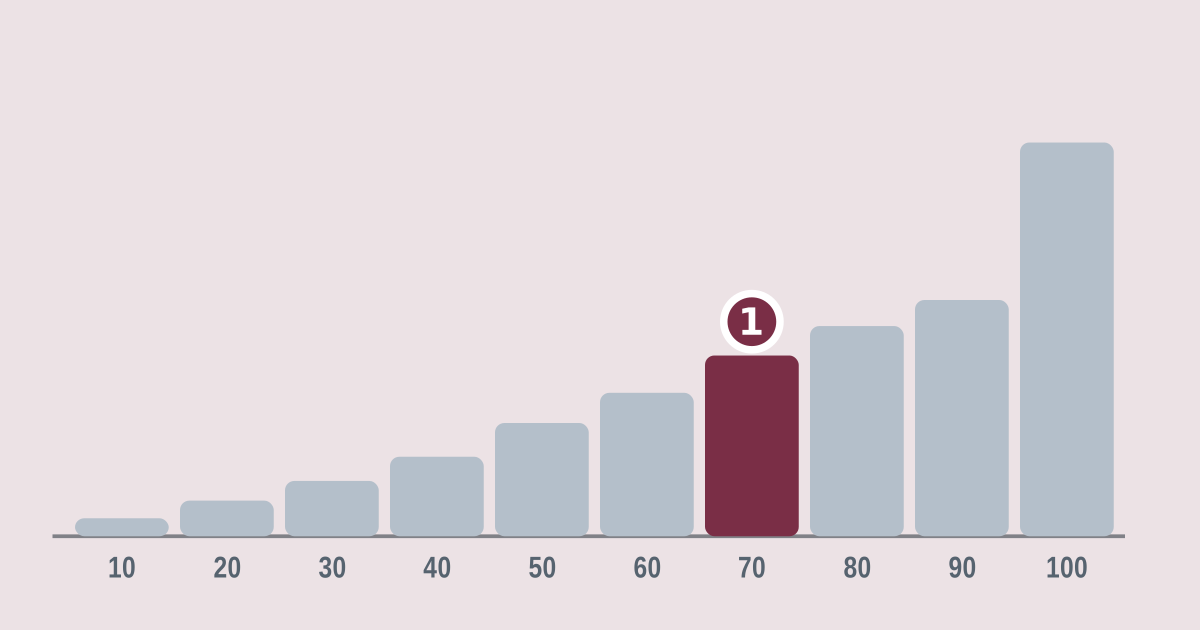
The bilateral factor adds 10% of the combined value when both arms, both legs or paired skeletal muscles carry compensable ratings. Under 38 CFR 4.26, the paired ratings are combined first, 10% of that value is added (not combined), and the result is treated as one disability for everything that follows.
- 160% rating 60 squares
- 221% rating 8 squares
- 320% rating 6 squares
- 4Efficiency left 26%
- 5Combined 70%
The regulation's example
60, 20 and two bilateral 10s: 10 and 10 give 19, plus 10% of 19 (1.9) is 20.9 or 21; 60 and 21 give 68; 68 and 20 give 74, converted to 70 percent. Step by step:
- The two bilateral 10% ratings combine to 19.
- 10% of 19 is 1.9; added, that gives 20.9, used as 21.
- The 21 is placed in order of severity with the other ratings: 60, 21, 20.
- 60 and 21 give 68; 68 and 20 give 74, rounded to 70%.
Without the factor the same four ratings would be combined as 60, 20, 10, 10, giving 74 and 70%. Here the factor lifts the exact value but not the rounded rating; with other numbers it moves the rating a full step.
When it applies
- The disabilities must affect both arms, both legs, or paired skeletal muscles. "Arm" and "leg" mean the whole limb, so a hand counts with the opposite arm and a foot with the opposite leg.
- Each side must have a compensable rating. A 0% rating on one side does not trigger the factor.
- With all four limbs rated, the ratings for all four are combined and 10% of that value is added.
- The factor is applied before other combinations, and the result takes its place in order of severity.
When VA leaves ratings out
Paragraph (d) protects the veteran: if leaving one or more ratings out of the bilateral calculation gives a higher evaluation, they are left out and combined separately. The calculator tries every allowed grouping and keeps the most favorable, and the condition pages for limbs, such as knee limitation of flexion and sciatic nerve, show the factor at their own levels.
A few pairs worked out
- Two 20% knee ratings: 36 plain, 40 with the factor, rated 40% (plain: 40%).
- 30% and 20% on the two arms: 44 plain, 48 with the factor, rated 50%.
For the underlying math see why 50% and 50% is not 100%, and for any pair the combined ratings table.
Sources
- eCFR, 38 CFR 4.26 Bilateral factor, checked 2026-10-20.
- eCFR, 38 CFR 4.25 Combined ratings table, checked 2026-10-20.
Questions
How much does the bilateral factor add?
10% of the combined value of the paired ratings. Two 10% ratings combine to 19; 10% of 19 is 1.9, so the paired value becomes 20.9, used as 21.
Do both sides have to be the same condition?
No. 38 CFR 4.26 applies when compensable disabilities affect both arms, both legs or paired skeletal muscles, whatever the location or type of impairment; a right thigh and a left foot qualify.
Can the bilateral factor lower my rating?
No. Under 4.26(d), if leaving one or more ratings out of the bilateral calculation gives a higher evaluation, they are left out and combined separately.